
Yes. In my opinion, a good lineman school is worth it because it puts you in a stronger position to get into linework and gives you a better shot at getting your career started sooner.
You can enter this trade without going to school. Plenty of people have. But when you have a Class A CDL, climbing experience, tools and gear, and an understanding of how to work around a line crew, you have more to offer an employer than someone starting with none of those things.
That’s the value we see in lineman school. You’re investing in the preparation that can help you get that first opportunity and begin building a career.
Getting into linework without school can take time
There are several ways to get started without attending a separate line school. You can apply directly to a utility or contractor, pursue a union apprenticeship, or sign the appropriate out-of-work books through a local union. Some of our own instructors got into the industry without going to line school and built long careers that way.
Those routes are worth pursuing. Getting your CDL on your own can also help you qualify for opportunities, including work with contractors.
But applying doesn’t mean getting hired right away. Signing the books doesn’t mean a job call is coming tomorrow, and getting referred for work is different from being accepted into an apprenticeship. You may have to wait for openings or work through a selection process with other applicants.
When someone says, “I never went to school, and I got hired,” that can be completely true. Their experience just doesn’t tell you how long it will take you to get the same opportunity.
Our view is that building your qualifications through a good line school is one of the strongest steps you can take while working toward that first job. It gives an employer more reasons to consider you.
Lineman school gives you more to bring to an employer
The advantage comes from the full package of preparation.
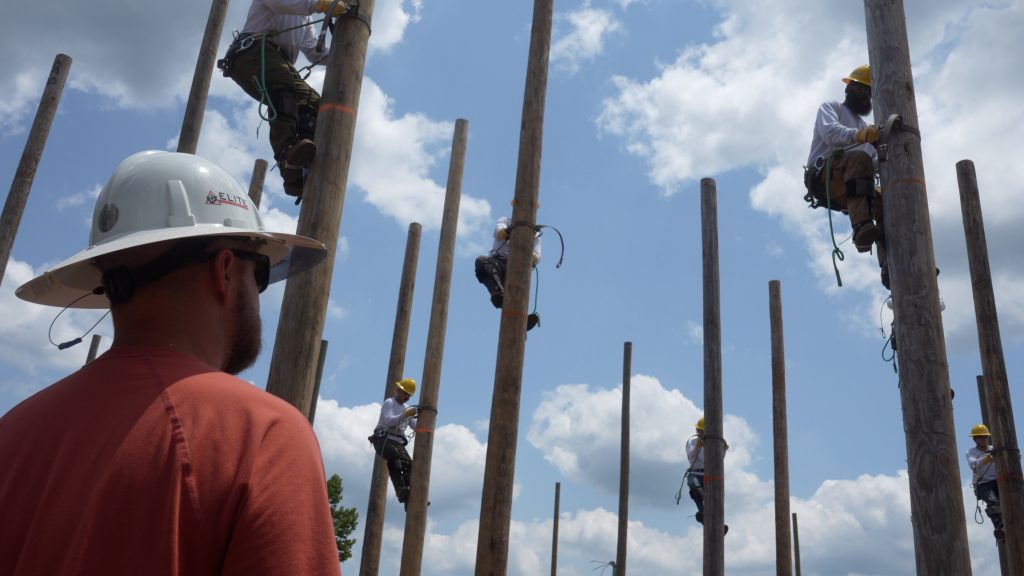
At Elite Lineman Training Institute, students work toward their Class A CDL, receive tools and climbing gear, and learn how to use that equipment. They climb poles, practice building lines, and learn the ground work that supports a crew. They also train with bucket trucks and digger derricks and study basic electricity, wire identification, knots, and line materials.
That gives you specific things to put on a resume and talk about in an interview. You can explain what you’ve practiced and what you’ve learned. You’ve spent time working through tasks under instruction, and you’ve had a chance to understand what this kind of work involves.
You’re still new to the trade. But you’re coming in with a foundation, and I believe that gives you a leg up when you’re competing for an entry-level opportunity.
The quality of that foundation matters. Programs vary in what they include, how much practical training students receive, and the experience of their instructors. The value is in the preparation you leave with, so the school you choose matters.
Completing the training shows commitment
When you finish a line school program, you’ve got skin in the game. You’ve invested time and money, taken instruction, and stayed with the training even when it was difficult.
You’ve also had a chance to find out whether you want to keep doing this. Climbing a pole and learning to trust your equipment is a different experience from watching someone else do it online. Finishing the program and still wanting to pursue linework gives you something meaningful to explain to an employer.
An instructor who has worked with you can speak to your attendance, attitude, progress, and ability to take correction. That can help a company get a better picture of the person it’s considering hiring.
At ELITE, we also help students build resumes, prepare for interviews, and understand how to pursue opportunities. Experienced instructors can offer guidance and industry connections. Our character development and financial coaching are there to help students handle the responsibilities that come with the career, too.
All of that is part of the preparation you’re paying for.
Your first job gets your career moving
Your first job in linework may not be with the big utility you’ve always wanted to work for. You may start with a contractor or another employer where you can begin learning the trade and gaining experience.
That is a real start. Once you’re working, you can build a reputation, learn from the people around you, and work toward the opportunities you want next. You don’t have to land your dream job on day one for school to have served its purpose.
Line school doesn’t make you a journeyman. You still need substantial training and experience on the job, typically through an apprenticeship or an employer’s training program. The purpose of school is to help prepare you to get into that next stage.
At ELITE, we’ve seen many of our graduates go on to work in linework. That experience is a big part of why we believe in what we do. No school can promise every graduate a job or a hiring date, but we feel confident in the preparation we provide and the opportunities students can pursue with it.
Put the cost in the context of the career
Spending twenty-something thousand dollars on a training program is a big decision. The upfront cost matters, and you need to account for the full expense, including living costs and any financing charges.
But I also think it’s worth looking further down the road.
Imagine you and another lineman looking back after long careers. The other person got into the trade without paying for school. You paid for training that helped you get started. You both went on to earn a living, gain experience, and build a career doing the work you wanted to do.
The money you spent is a real difference. But if that education helped you get into the career you wanted, I wouldn’t look back and call it wasted money just because someone else got there another way.
Time has value, too. If the preparation helps you get hired sooner, that can mean starting to earn income in the trade, gain experience, and move through your training sooner. School itself takes time, so the comparison needs to include that as well as any time spent looking for work afterward.This is where I think the decision comes down to one question: Is the investment worth putting yourself in a stronger position to get started, or would you rather avoid that expense and keep pursuing a route that may involve more waiting?
For someone who wants to get their career moving and can make a workable plan for the cost, my answer is that the investment can absolutely be worth it.
Why we believe lineman school is worth it
At ELITE, we believe a good line school gives you a stronger starting point. You have practical training, the opportunity to earn your CDL, tools and gear, and people helping you prepare to apply. You can show an employer what you’ve already done to get ready for the trade.
If a good opportunity comes along without school, take it seriously. But you don’t have to make your whole plan depend on waiting for someone to hire you with little or no preparation.
Our goal is to help you get ready for that first opportunity so you can begin building the career you’re after. That’s why, in my opinion, lineman school is worth it.
To see what that preparation looks like at ELITE, explore our training program, what’s included, and the full cost of attendance.

